


|
Echinacea
Introduction[Top]
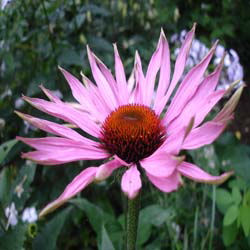
It is indigenous to central as well as eastern North America and blooms in early summer. What Coneflower Is Used For[Top] Traditionally coneflower has been used by native americans to treat insect bites, swollen lymph nodes, burns, prevent flu, colds, as well as other infections. Native Americans learned of coneflower by watching elk seeking out the coneflowers and eating them when they were wounded or sick. The San people and the Australian aborigines also learned about all herbal medicine this way, as well as many indigenous groups all over the world. The practice of animal self medication is called zooharmacognosy Additionally coneflower has been used to boost the immune system and for acne, boils and for wounds.
African American slaves also used coneflower to treat ailments. How Coneflower Is Used[Top] Coneflower is used dried or fresh to make extracts, teas squeezed (expressed) juice, or preparations for use externally use. Science Says[Top] A review done by the university of Maryland found that echinacea shortened the duration of a cold and reduced cold symptoms, if it was taken at the first evidence of a cold. The (EMA) European Medicines Agency has approved the use of both dried express juice and expressed juice from Coneflower for treatment of a cold as well as short term cold prevention. Side Effects and Cautions[Top] When taken internally, coneflower does not usually cause side effects. However, there are people who experience allergic reactions; this includes increased asthma, anaphylaxis, which can be life threatening and rashes. If you have allergies to plants in the daisy family which includes daisies, ragweed, chrysanthemums, and marigolds. In addition, people with asthma or atopy (a genetic tendency toward allergic reactions) may be more likely to have an allergic reaction when taking coneflower.
|
Loading